
A language teacher that knows you.
A good teacher gets to know their student: how they learn, who they are, and what they want to achieve, then builds a plan to get them there.
Ling Lang keeps track of it all, down to every word you use, so nothing gets missed and your learning plan is completely personalized to you.
- Android

- iPhoneComing soon on the App Store
Welcome back! You are halfway through your café milestone. Last Thursday you learned Je voudrais for ordering, so let's use it. How would you ask for a coffee?
Recalling last Thursday's lesson15:28Je voudrais un café.
15:28Perfect! And un is right, because café is masculine. Last week you mixed up une with une baguette, so let's check it. Order a tea instead.
Checking your past slips15:29Je voudrais une thé ?
15:29Close! thé is masculine too, so it is un thé. That is four of five right today, up from two of five last week. Add s'il vous plaît at the end to be polite.
Saving today's progress15:30Je voudrais un thé, s'il vous plaît.
15:30
Inside the app
Take a look before you download.
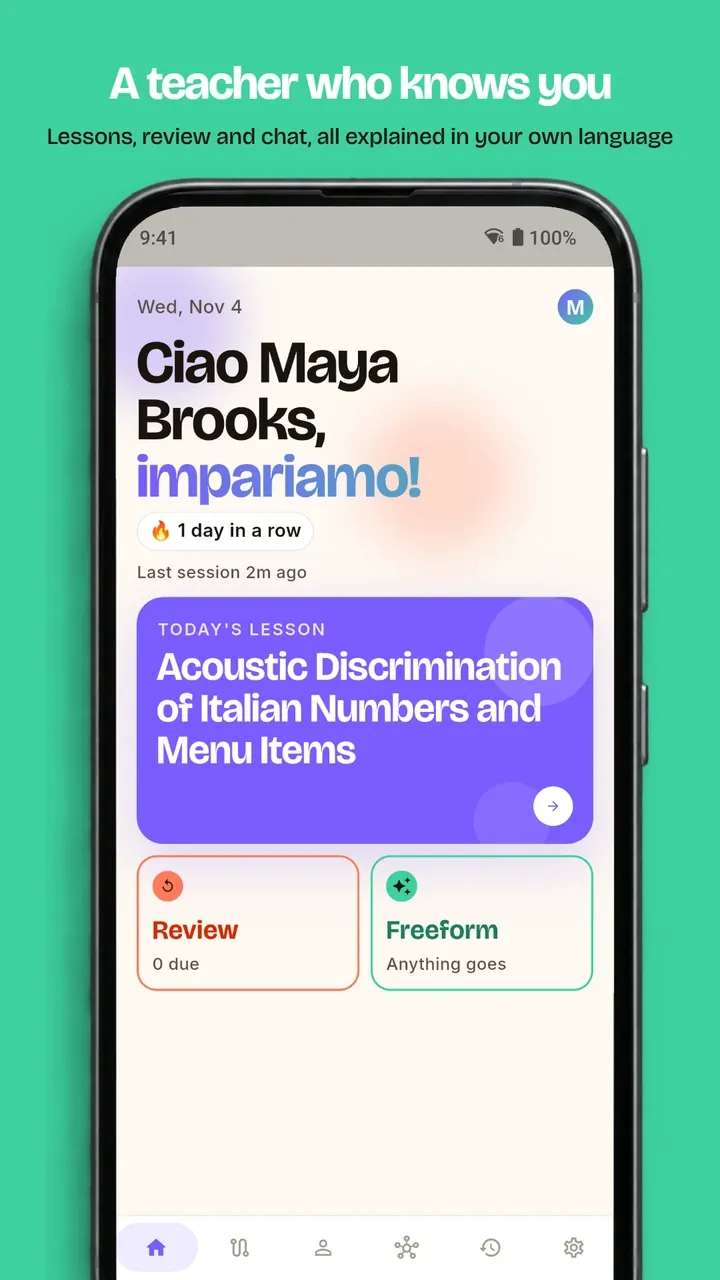
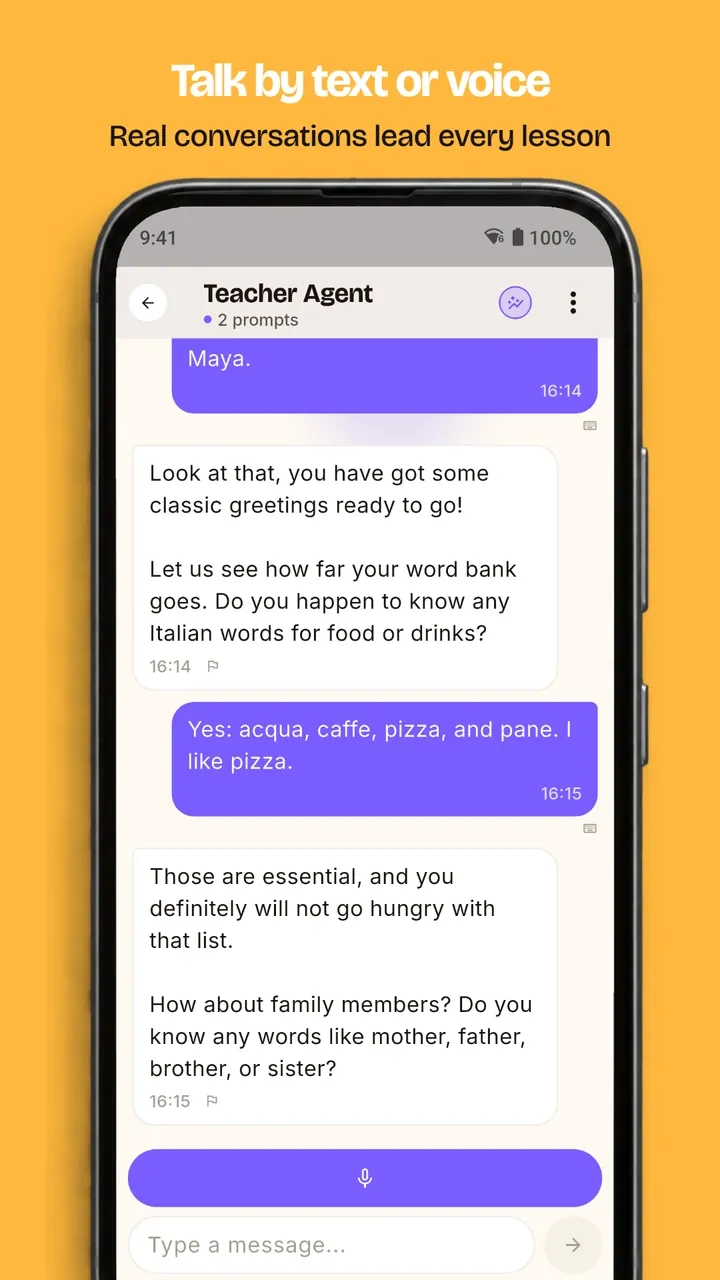
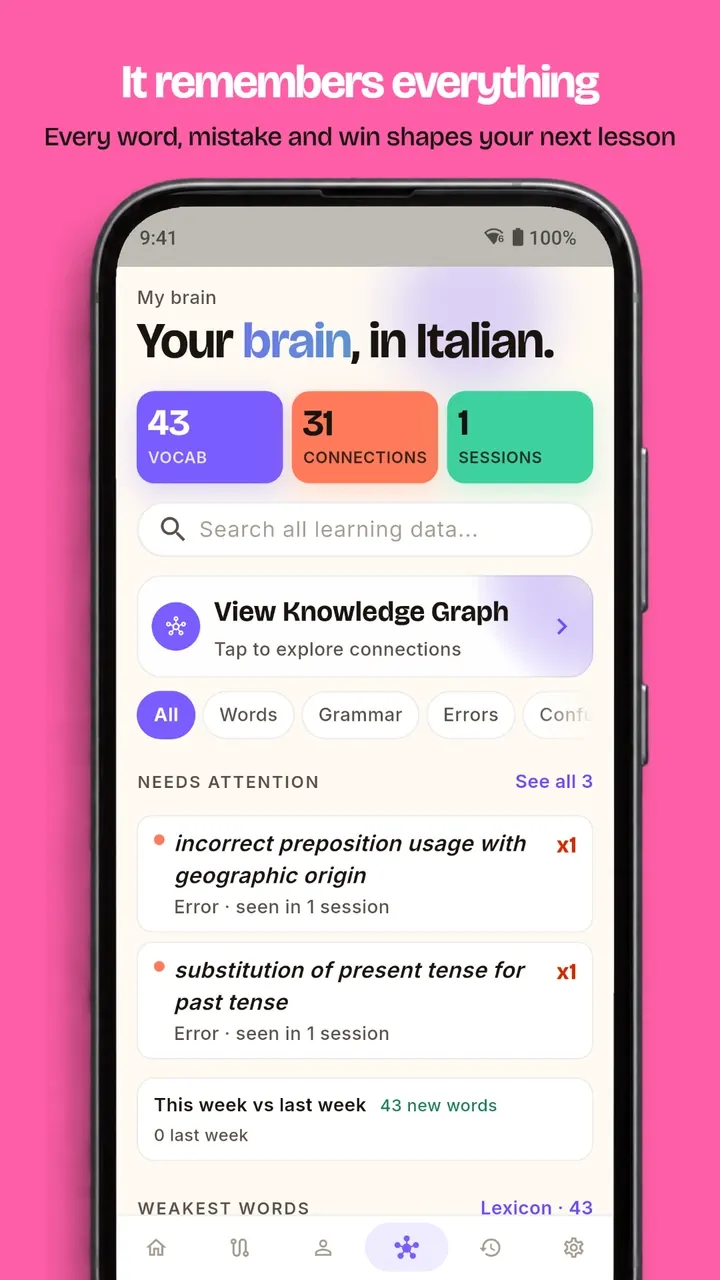
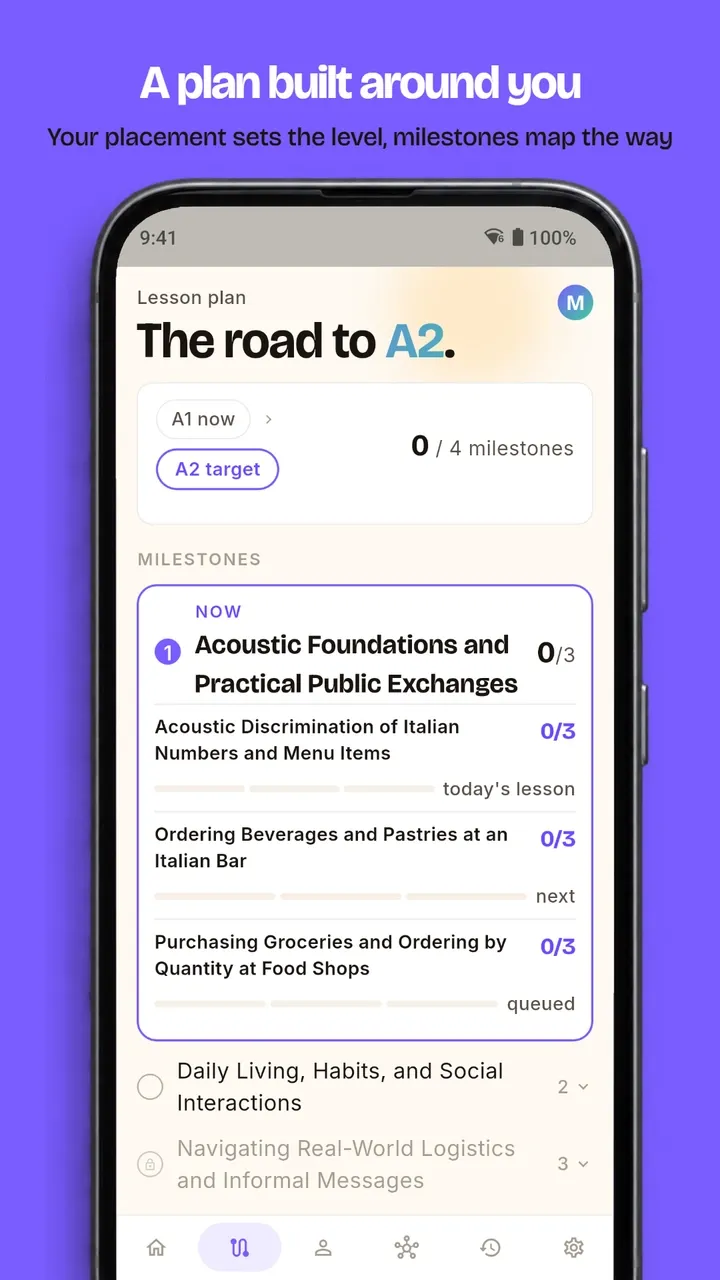
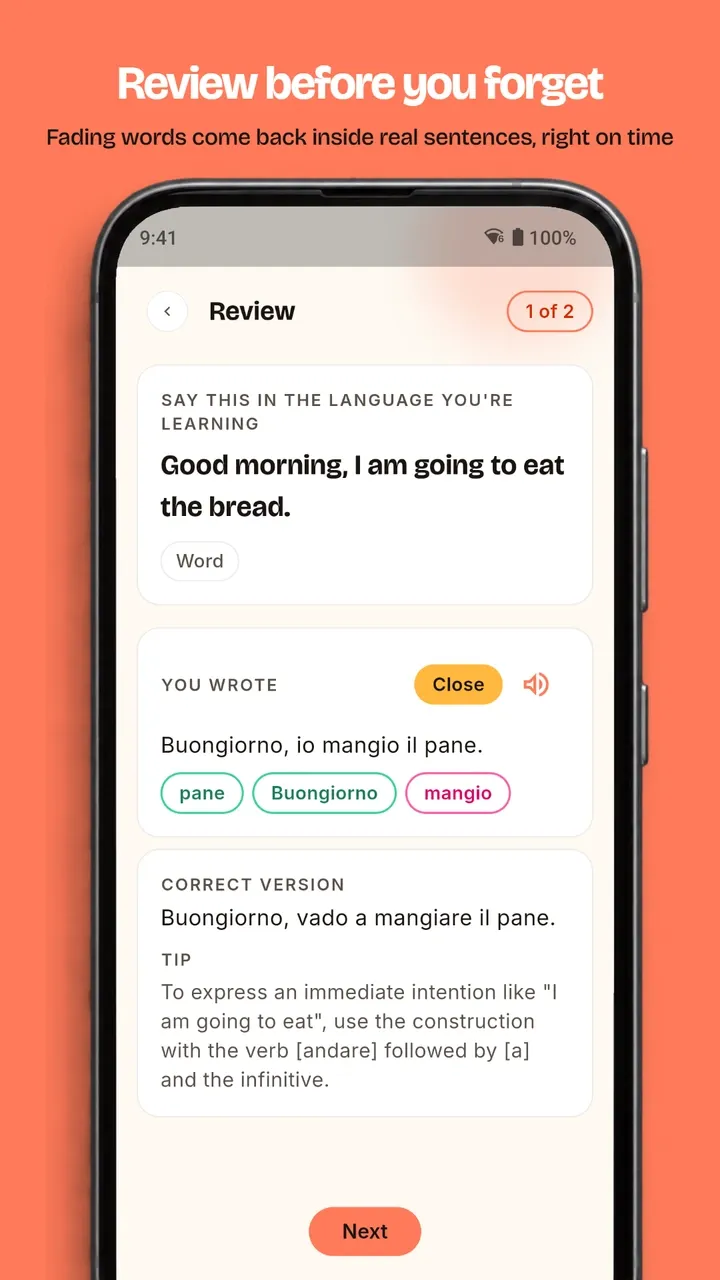
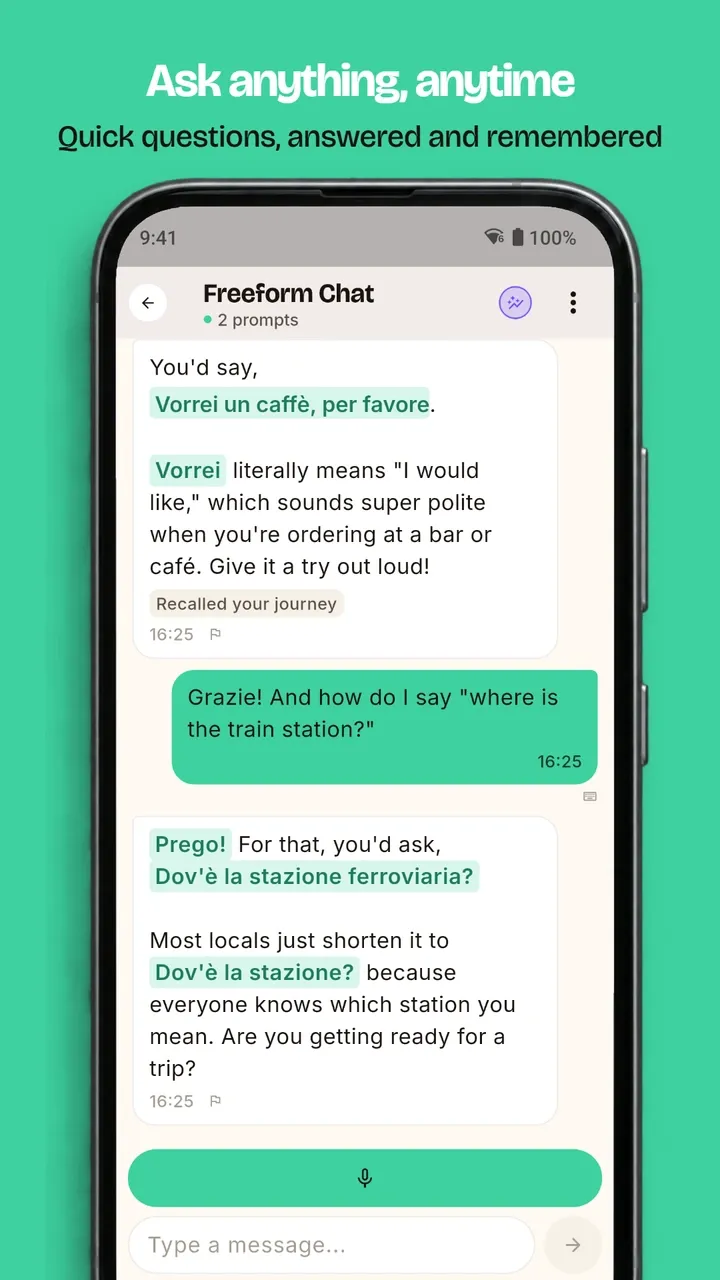
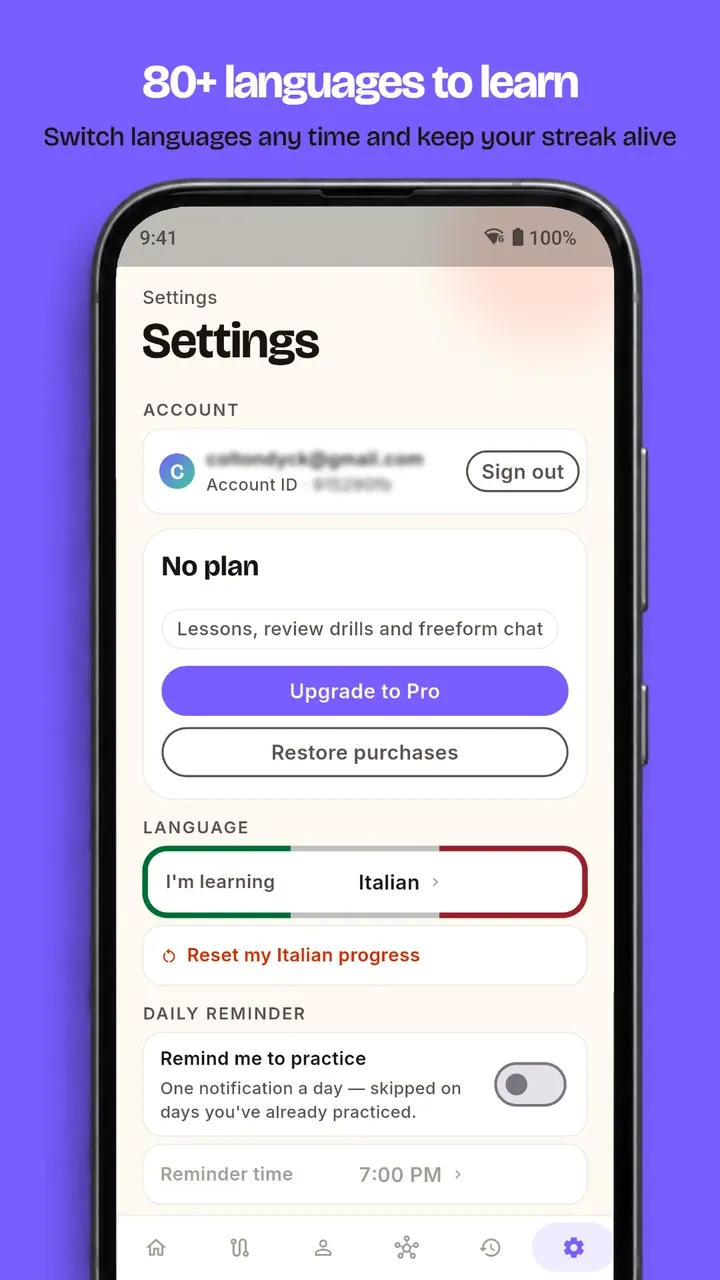
Languages
86 languages, taught in your own language.
- EnglishEnglish
- FrançaisFrench
- EspañolSpanish
- 中文Chinese (Mandarin)
- ਪੰਜਾਬੀPunjabi
- УкраїнськаUkrainian
- اردوUrdu
- हिन्दीHindi
- العربيةArabic
- FilipinoFilipino
- DeutschGerman
- 日本語Japanese
- See all 74 more
Why it works
Three things flashcards will never do.
- 01 · Conversation
Talk. Ask why. Get a real answer.
Practise a real scenario, like ordering at a café, then ask anything about the language: why it is un and not une, when tu becomes vous, how to sound more polite. The teacher explains the pattern behind every correction and coaches you through how to improve.
Why un and not une?When is it tu, and when vous?How do I say that politely? - 02 · Your plan
A plan built for you, not for everyone.
A short assessment places you at the right starting point. From there the teacher builds your plan: your goal, the milestones on the way, the skills you prove in conversation.
Start: A1, placed by your assessmentGoal: order at a caféMilestone: ask politelySkill: un or une - 03 · Knows you
It learns how you learn, then teaches that way.
Every turn becomes notes: the words that stick, the slip you keep making, whether you learn best by talking it out or seeing it written. The next lesson reads them before it says a word.
Je voudraiss'il vous plaîtun / une, 2 slipsLearns best by talking
Inside a lesson
Corrected, explained, remembered.
Say it your way. The teacher keeps what you got right, fixes the one slip, and explains the pattern so it sticks. Then it writes the slip down and brings it back just before you would forget it.
- New word
- mercato
- Slip
- a + il, not joined into al
- Got right
- domani vado
- Next review
- in 3 days
- Teacher
How would you tell a friend you are going to the market tomorrow?
- You
Domani vado a il mercato?
- Teacher
Nearly, and domani vado is perfect. When a meets il, Italian joins them into one word: domani vado al mercato. Say it once more.
- Saved to your Teacher Notes
Now on Android
Start a conversation that remembers you.
Ling Lang is on Google Play now, and the iPhone version is coming soon to the App Store.
- Android
- iPhoneComing soon on the App Store